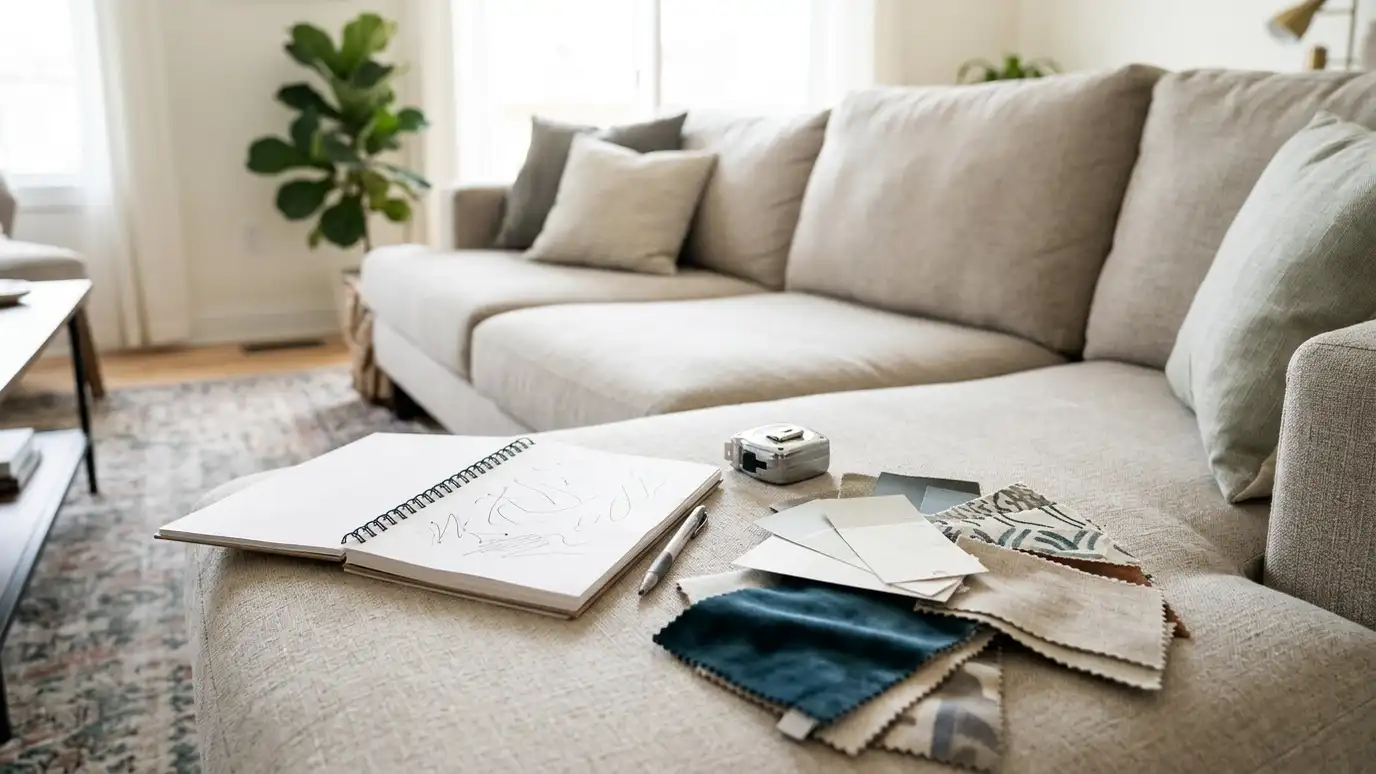

Know what you need first
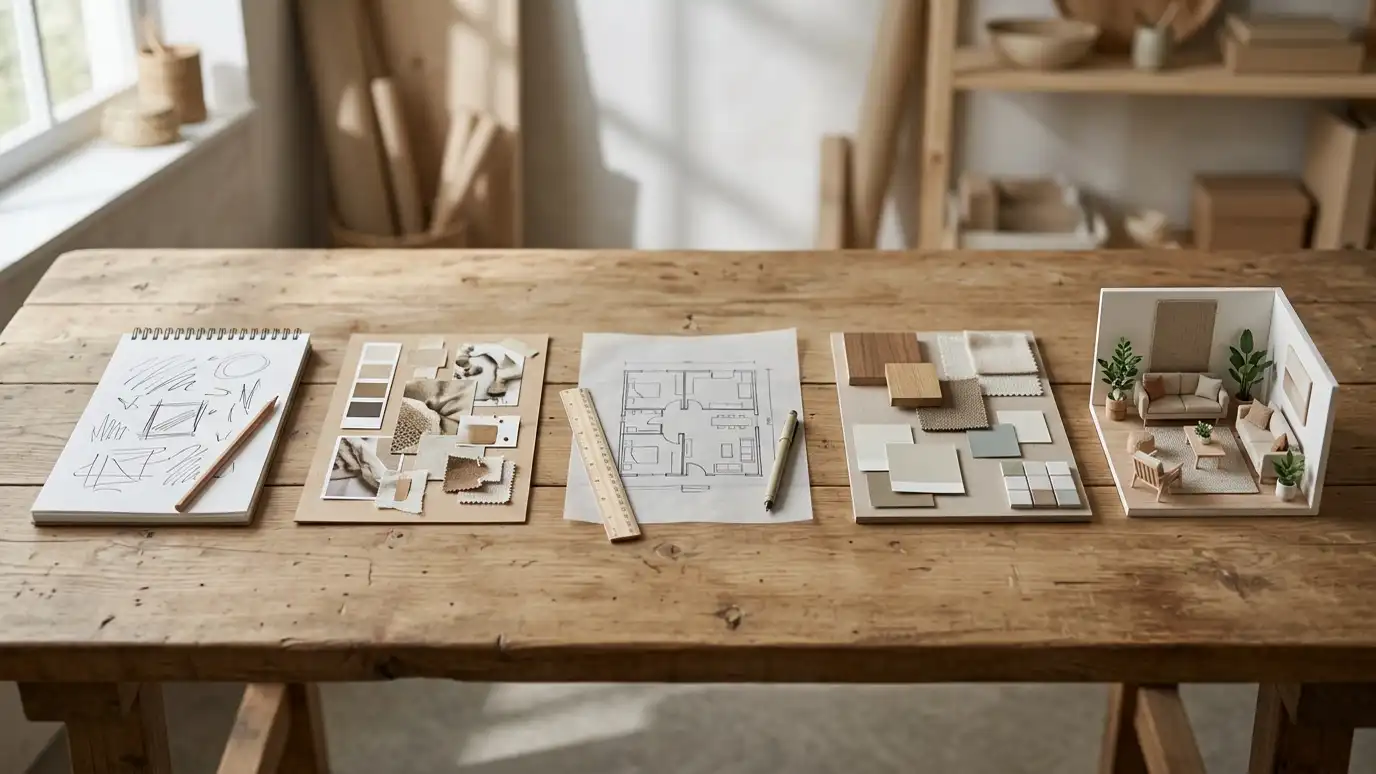
Before you call anyone, write down what you want: rooms, style, timing, budget range and any must-haves. Gather photos you love and note what you dislike.
Decide whether you need a full-service designer, a decorator, a consultation or help with just one part, such as paint or lighting.
Clear goals help designers give accurate answers, and they help you compare fairly.
Write a one-page summary of your project before you call anyone. It makes every conversation more productive and helps designers respond with relevant ideas.
Where to look
Start with friends, neighbors and local real estate agents who have had work done. Browse portfolios online and look at projects that resemble yours in size and style.
Professional associations and local showrooms can also point you toward designers. Visit a few finished projects if you can.
Look for a style range that suggests the designer listens to clients rather than repeating one look.
Look closely at portfolios for range and detail. Good photographs are nice, but what matters is whether the projects show problem solving and variety.
Questions to ask
Ask about experience with projects like yours, how the process works, who will work on your home, how fees and purchasing are handled and how long projects usually take.
Ask how they handle changes, delays and damaged deliveries, and how they communicate during the project.
Ask for references and call them. Past clients can tell you what the process was really like.
Ask who will be working on your home day to day. Meeting the person who will answer your messages tells you a great deal about the experience ahead.
Check credentials and rules
Titles, registrations and rules vary by state and by type of work. Ask any designer what applies to their services and to your project, and check state resources when relevant.
For contractors and trades, use official lookup tools to verify who is permitted to do the work.
Ask for a written agreement before you begin and keep copies of everything.
Read the proposal slowly. If anything is vague, ask for it in writing. Clear contracts protect both sides.
Compare proposals
Ask each firm for a written proposal with the same details: services, deliverables, meetings, revisions, fees, purchasing arrangements and what is excluded.
A very low fee may leave out essentials. A very high one may include services you do not need.
Use our proposal scorecard to compare on price, scope, communication and fit.
Talk about communication habits. How often will you meet, how will updates be shared and how quickly are messages answered? Good habits prevent most frustrations.
Trust the fit
You will make many decisions together, so chemistry matters. Choose someone who listens, explains clearly and respects your budget and taste.
A good designer pushes back gently when needed and tells you honestly what will and will not work.
Start with a Free Estimate if you want to see how a firm works before committing.
Trust your instincts after the interviews. Comfort and respect matter as much as the portfolio, because you will work closely for months.
Know what you need, ask the same questions of every firm, check references and rules and choose someone who listens.