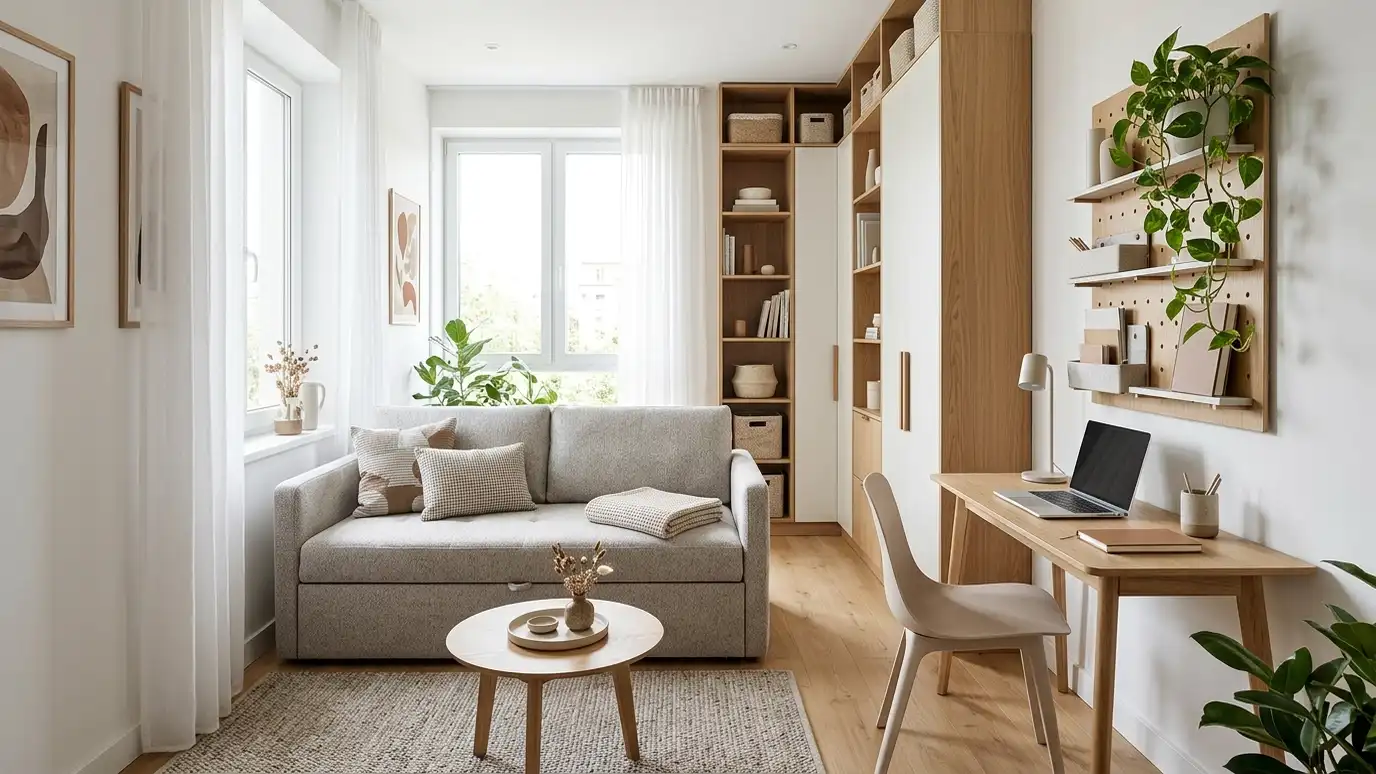
Measure and plan
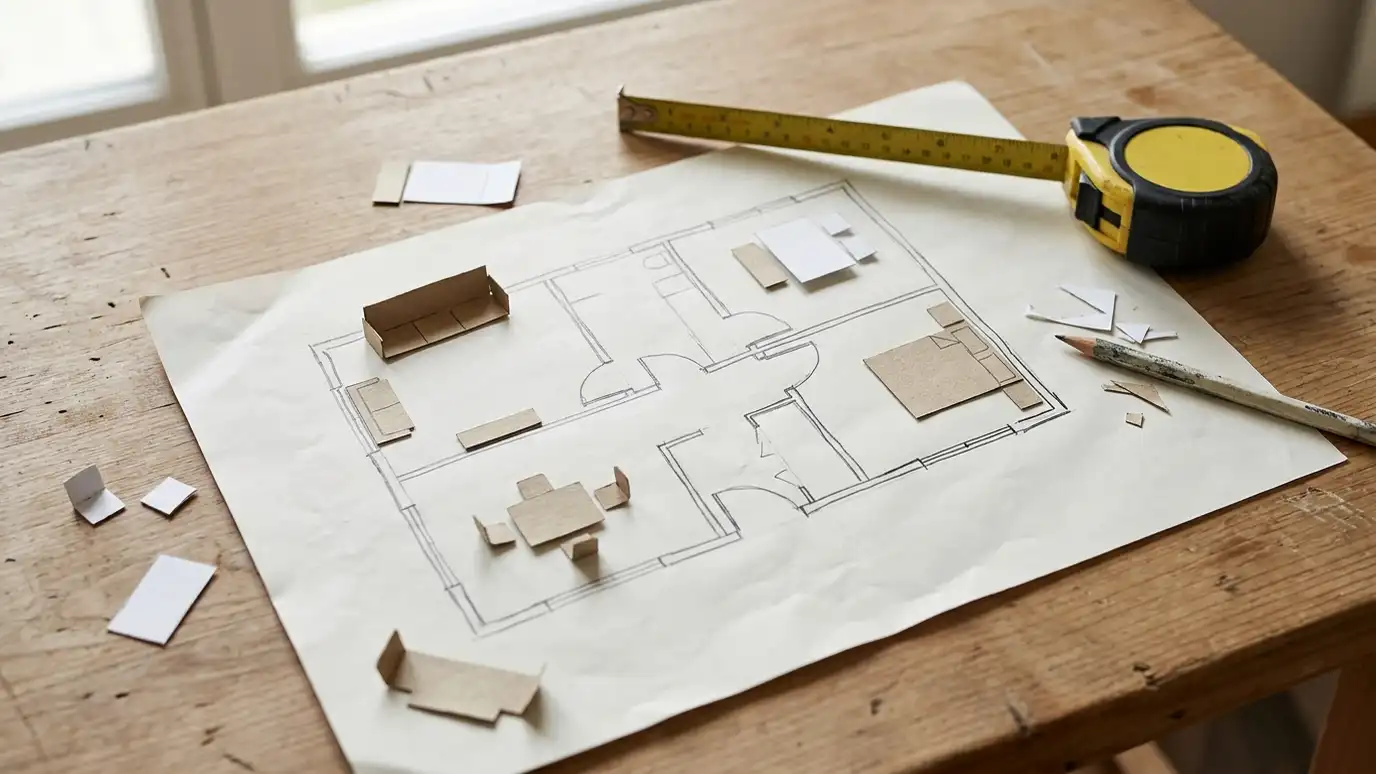
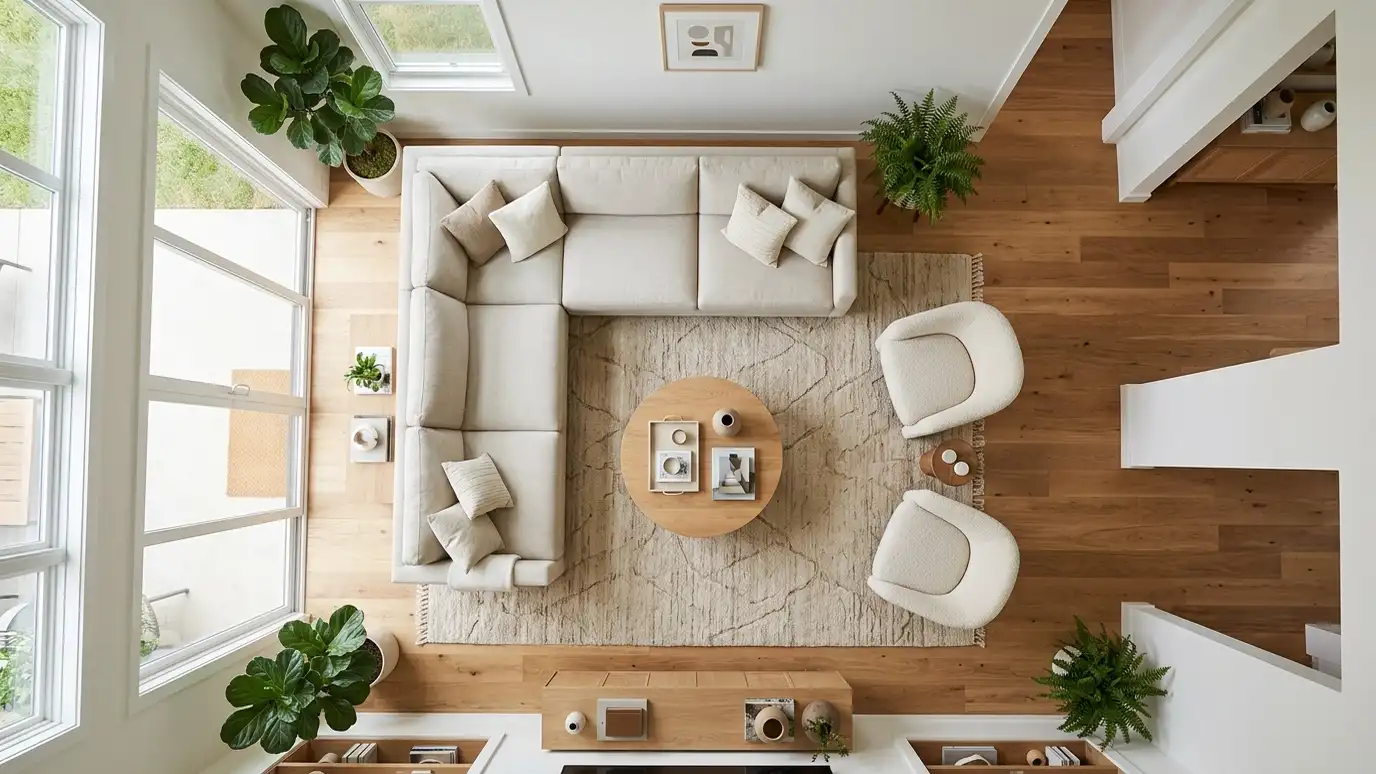
Small rooms have no room for mistakes. Measure walls, doors, windows and radiators, then draw the room to scale and place furniture on the plan.
Check door swings and walkways. Aim for clear paths of about three feet where you can.
Plan before you buy so each piece earns its place.
Take a photo of the room from the doorway and again from the far corner. Seeing it as a visitor does often reveals what is crowding it.
Choose the right scale
Furniture that is too large overwhelms a small room, and pieces that are too tiny look lost. Choose a few well-sized items rather than many small ones.
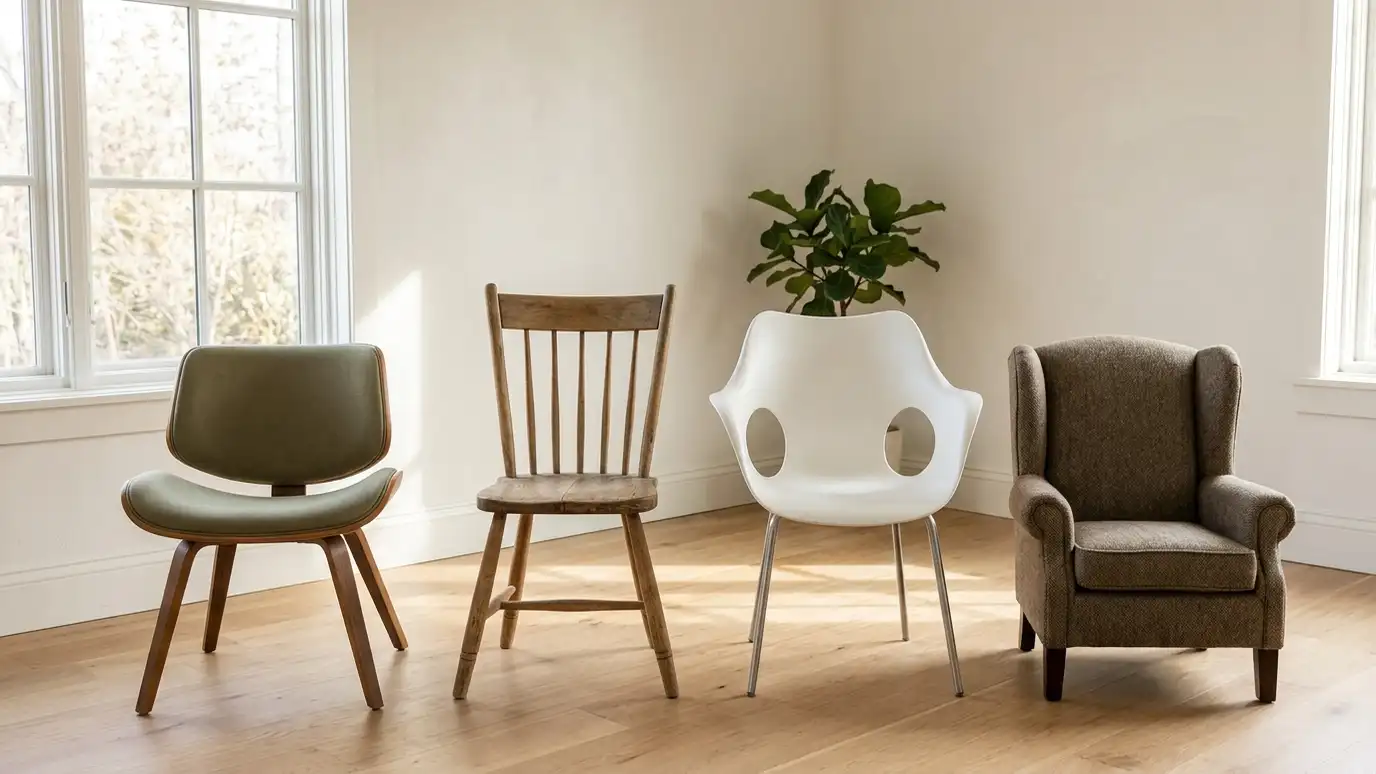
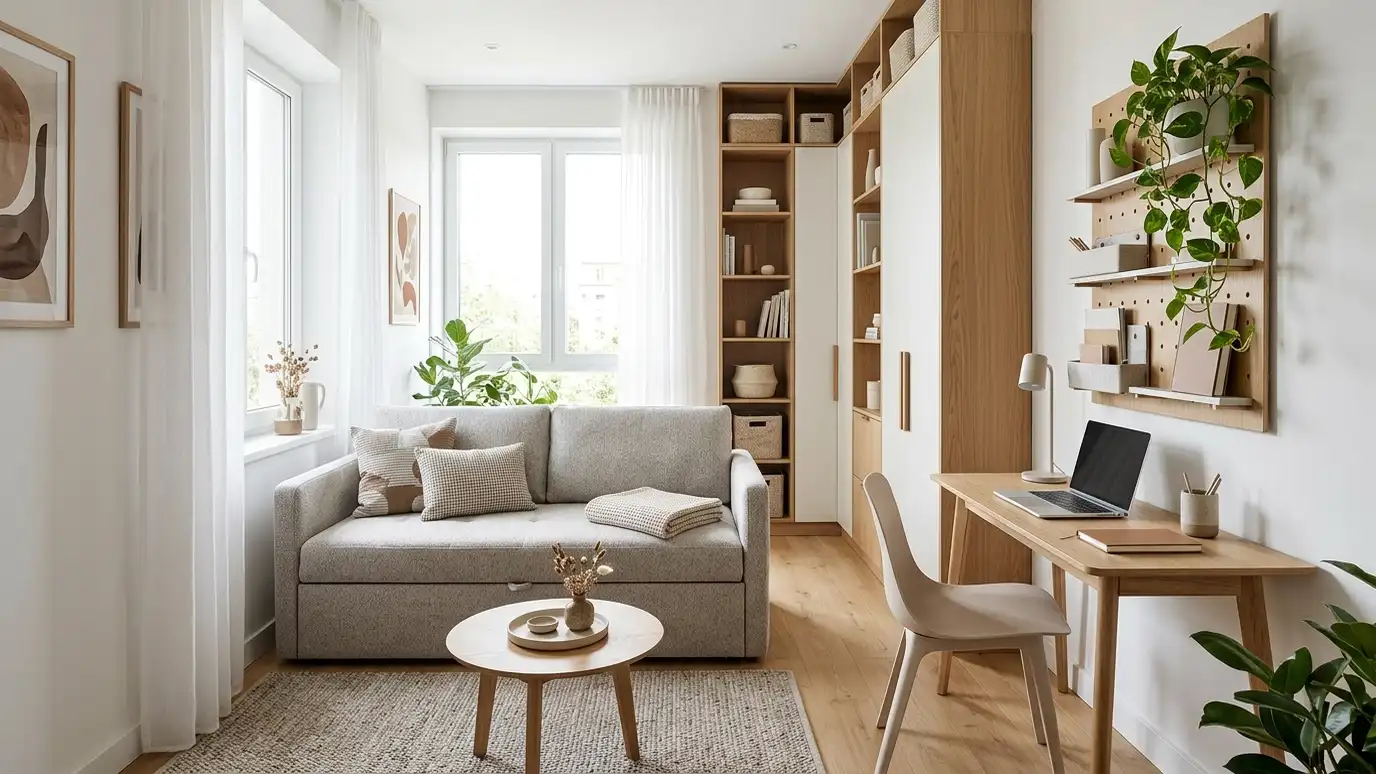
Look for furniture with exposed legs, slim arms and open backs, which show more floor.
Use one larger rug that sits under the front legs of the furniture to unify the space.
Try arranging furniture on graph paper at scale before moving anything heavy. It is quick and costs nothing.
Use vertical space
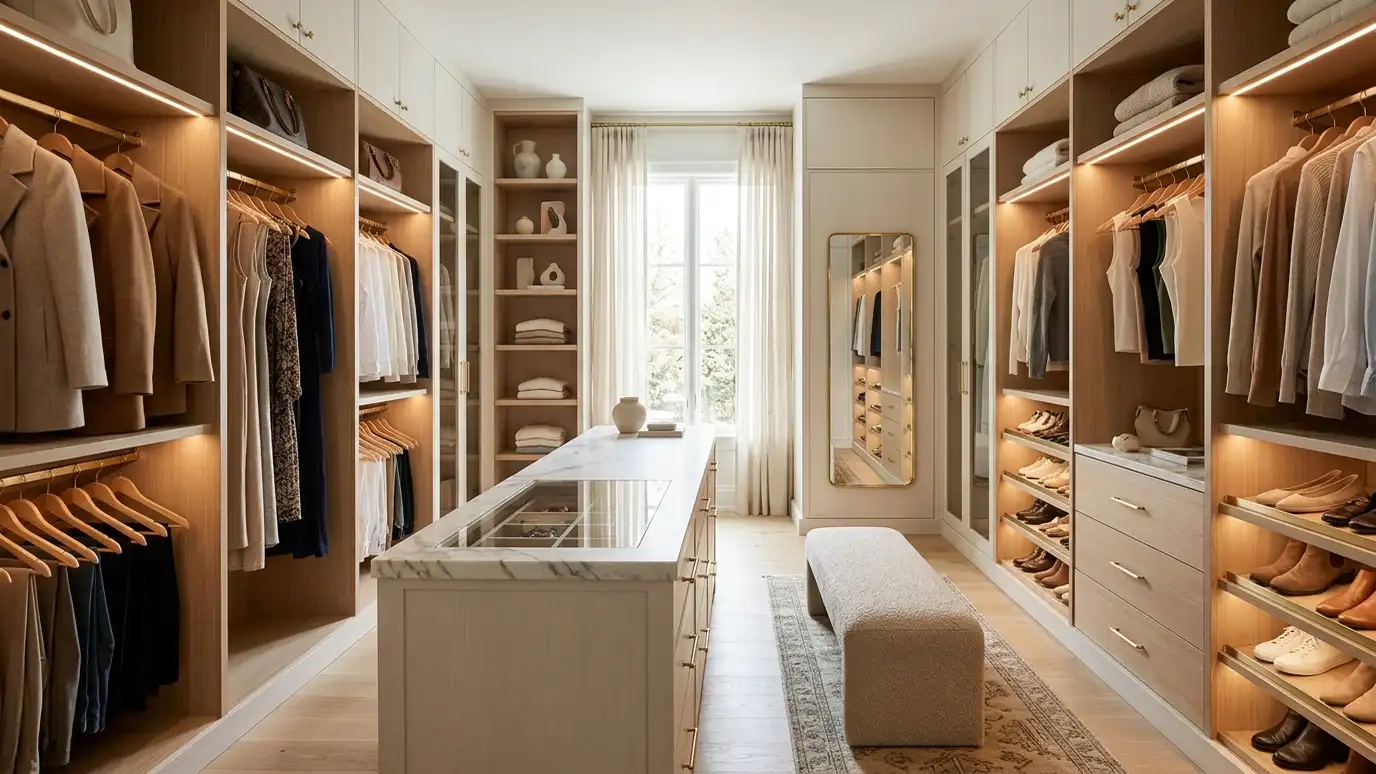
Tall bookcases, wall shelves, hooks and hanging storage use the walls instead of the floor. Curtains hung near the ceiling make windows and ceilings feel taller.
Mount lighting on the wall to free table space.
Keep the tallest pieces on the wall with the fewest windows.
Look up. Shelves, hooks and hanging storage often hide in plain sight on a blank wall.
Pick multipurpose pieces
Ottomans with storage, beds with drawers, nesting tables and fold-down desks help rooms serve several purposes.
Choose pieces that double as seating and storage.
Avoid buying items that do only one small job unless you love them.
Before you buy a multipurpose piece, test the second function. A bed with drawers is only helpful if the drawers open fully.
Use color and light
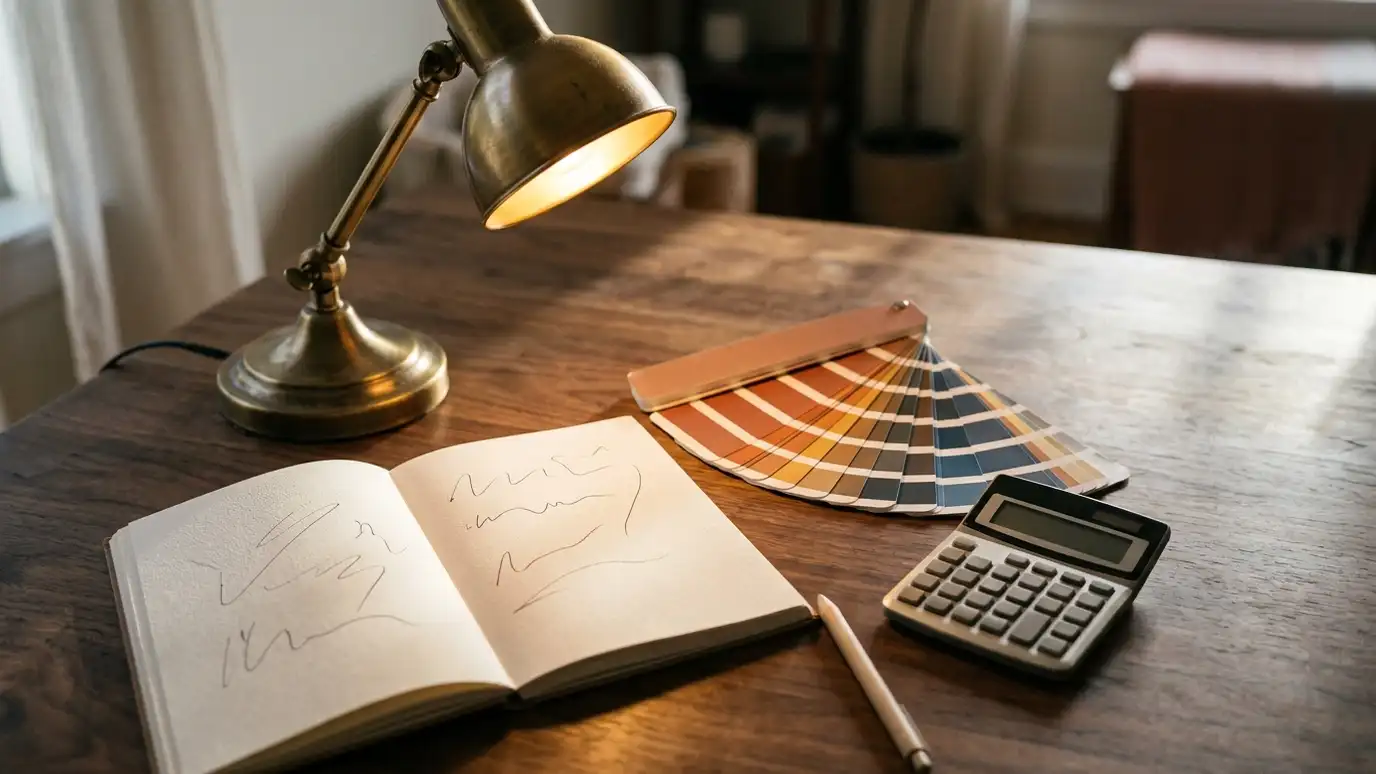
Light, related colors make walls recede, and a consistent palette reduces visual breaks. Dark colors can also work in small rooms if used with intent and good lighting.
Mirrors placed across from windows bounce light.
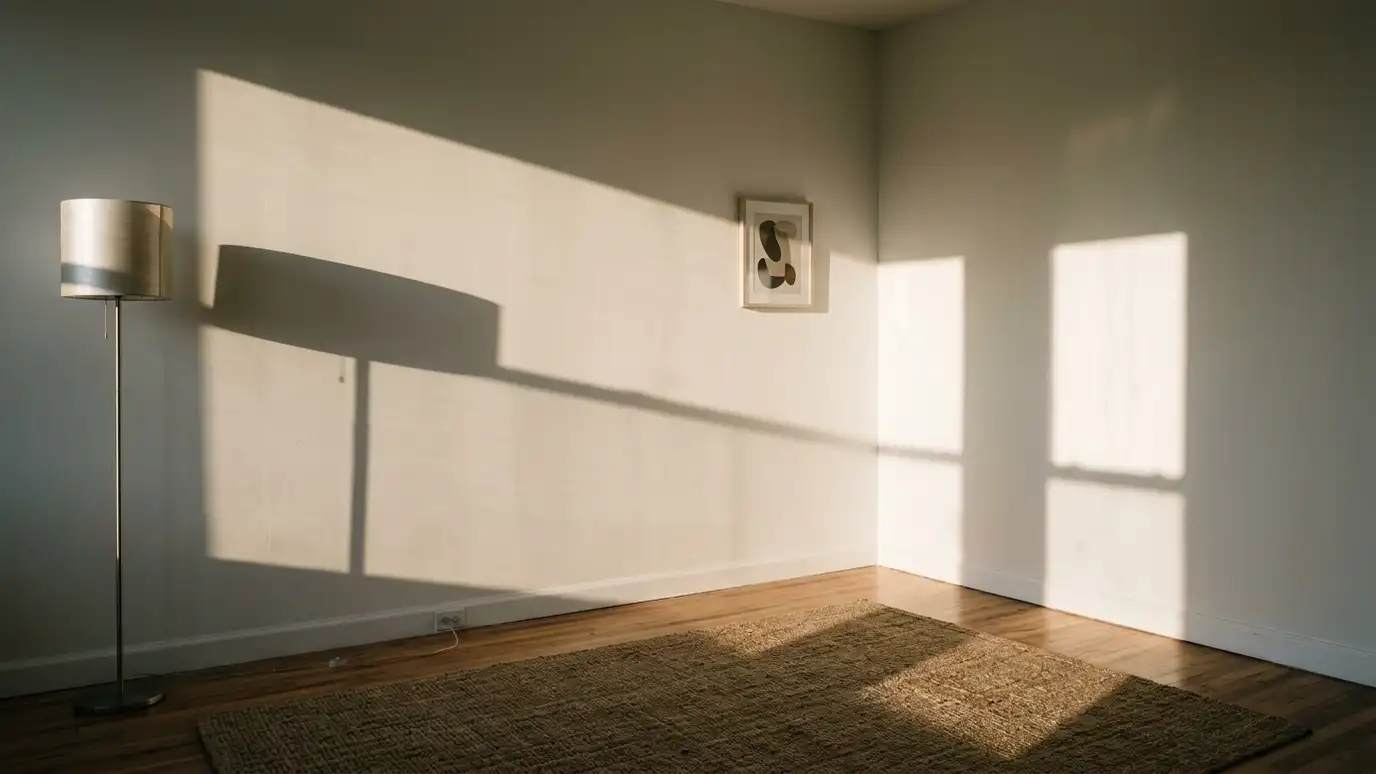
Layer lighting so no corner is dark.
Hang a mirror on the wall opposite a window and notice how much brighter the room feels.
Edit and organize
Clutter shrinks a room faster than anything. Keep surfaces mostly clear and store seasonal items elsewhere.
Use baskets and boxes to hide small items.
Review what you own each season and let go of what you do not use.
Set a rule that for each new item, one old item leaves. It keeps small spaces from filling up again.
Measure first, choose fewer and better pieces, use the walls and keep colors and clutter calm.